About us

Announcement:

This is a Testing Annocement. I don't have Much to Say. This is a Place for a Short Product Annocement

Tuesday, February 16, 2016

Tesla Motors Model S


Monday, February 15, 2016

10 Reasons to Upgrade to Windows 10 MICROSOFT


Video Chat Your Way Into College: How Tech Is Changing The Admissions Process

Video college applications
LA Johnson/NPR
Before he arrived in Omaha as a doctoral student in computer science, Jason Jie Xiong says, "I didn't even know there was a state called Nebraska."
Jie Xiong, 29, who hails from a small city outside Shanghai, had landed a full scholarship at the University of Nebraska to teach and do research. He says he only knew "more famous states like California and New York."
He admits he found the program initially "by randomly checking information," but he's quick to add that he's happy there.
It's an irony of our digital flat world: Even though online college enrollment is growing, more students than ever are eager to board planes and cross oceans to study in physical classrooms in the United States.
Nearly a million students from overseas are heading to U.S. colleges and universities each fall. That number is up 58 percent from a decade ago, driven by a massive increase in Chinese students.
International students are worth a lot to colleges because most of them aren't eligible for financial aid and pay full tuition. Along with this growth, though, have come growing pains.
Many colleges have raised concerns about overseas applicants. Their English skills may not be up to snuff or they may have falsifications or discrepancies on their applications. They worry that many students are heavily coached through the essay-writing process in particular, by companies that specialize in this service.
"These consulting companies can charge 5,000 U.S. dollars," says Jie Xiong, who didn't want to spend that kind of money. "I wanted to do it myself."
For their own part, international students have concerns, too: They may not fully understand how large the United States is, or how to compare public, private and for-profit institutions that have similar names.
It can be a drag to end up spending four years at the State University of New York in snowy Buffalo, if you were dreaming of the Big Apple, or Miami University in Ohio if you wanted a sunny beach.
Two new companies, Kira Academic and YouVisit, market novel applications of technology to colleges that want to find the best overseas students and vice versa.
Kira Academic is a video-based real time admissions platform that works like a virtual interviewing tool. It was founded three years ago, initially aimed at corporate recruiters.
Then about a year and a half ago the company "happened to land a couple of university clients," says co-founder Emilie Cushman. "They weren't using any kind of process to test for things like fit, even though they all said it was really important."
The company saw the potential market in higher education, and it now works with 140 universities around the world.
Kira works with colleges to come up with a specific battery of questions. These are designed to get at various underlying characteristics or "competencies" that might make students successful at that college, such as willpower or the ability to collaborate.
"A lot of schools ask the same, very generic questions. And we saw that as a missed opportunity," Cushman says.
Kira's pitch is that it can help colleges find applicants who are the best fit on these soft skills. But, says Nikki Lemley of the Olin Business School at Washington University in St. Louis, the "primary reason" they use Kira is simpler: to make sure prospective students are fluent in English.
Olin gets about 2,500 applications each season for 190 seats in its business-related master's programs. An estimated 90 percent come from overseas, primarily China.
"With the written essay, our hope is that the student has written it themselves, but there's no guarantee," says Lemley, the school's associate director
of specialized master's programs. The video is much more effective, she adds, for judging English communication skills.
The technology is designed to foil rehearsed answers. An admissions officer or other administrator records each question as a video prompt. A random prompt is shown to the applicant, who gets 30 seconds or so to think about it. Then the camera on their laptop comes to life and it's time to talk.
Using Virtual Reality
If Kira Academic is letting colleges take an advance peek at students, Abi Mandelbaum at YouVisit has turned the camera the other way around — literally.
YouVisit produces video-based virtual reality "tours" of hotels, travel destinations and colleges, including Harvard and Yale. Shot in high-definition video, the VR tours give students the opportunity to explore a campus while feeling as if they're really there. You can turn your head and look in all directions and roam different parts of a campus almost at will.
The video experiences are a draw for any student, but especially valuable for students from overseas, says Mandelbaum, who co-founded the company with two classmates from Brandeis University, Endri Tolka and Taher Baderkhan.
"I'm from Colombia," Mandelbaum explains. "One of my other founders is from Jordan and the third is from Albania." The three met on the first day of college as part of an international student event and have been friends ever since.
"We wanted to come to the U.S., but selecting from the thousands of colleges, it's a daunting experience," he says. "We had friends who came and didn't end up with a right fit. They ended up transferring."
Colleges like the Savannah College of Art and Design have mailed out low-cost Google Cardboard headsets to accepted students. They also purchase more expensive headsets to show off their "tours" at fairs and recruiting visits.
The company has added gamelike mechanics to some of its tours. For example, you might approach a piece of equipment in a lab, and it becomes a "hot spot" that pops up to reveal more information.
While admitting that VR is in its infancy, Mandelbaum is among many who imagine different ways that the technology might be used for education.
For example, one of their VR tours — of the Peruvian ruins of Machu Picchu — has already been used in some classrooms to engage students. And one day, VR might enable students and professors to "join" each other in real time, even if they occupy different sides of the globe in reality.
But for students like Jie Xiong, there's no place like Omaha. "There's lots of good universities in the United States, even though they're not ranked," he says. "China can't compare."

Apple Will Fix 'January 1, 1970' Date Bug in Upcoming iOS Update

Apple has officially acknowledged the "1970" date bug affecting 64-bit iPhone, iPad, and iPod touch devices. The support document does not identify a current fix, but Apple said that an upcoming iOS software update will prevent the issue.
Manually changing the date to May 1970 or earlier can prevent your iOS device from turning on after a restart. An upcoming software update will prevent this issue from affecting iOS devices. If you have this issue, contact Apple Support.
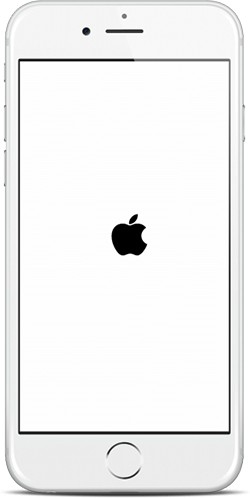
Manually changing an iOS device's date to January 1, 1970 results in a continuous reboot cycle, effectively bricking the device. Restoring through iTunes in DFU Mode may work for some users, while others have resorted to hardware fixes. 

Apple has not provided a reason for the bug, but YouTube video maker and programmer Tom Scott speculates that setting the date close to January 1, 1970, which is 00:00:00 in Unix time, may be resulting in an integer underflow -- in this case, a date prior to January 1, 1970. 

iOS then handles the underflow by returning the negative integrer to the maximum value, which Scott says results in a date that is some 20 times longer than the universe is expected to last. Scott believes iOS may have difficulties handling this large number, resulting in affected devices crashing. 


German website Apfelpage.de shared a second YouTube video showing that opening an iPhone and resetting its battery could fix the problem, but this method could damage your smartphone and void your warranty. The safer option is to visit a Genius Bar or contact Apple Support online or by phone. 

iOS is a Unix-based operating system, and Unix time starts at 00:00:00 UTC on January 1, 1970. Apple does not allow you to manually set your iOS device to a date prior to then, likely in an effort to prevent a bug like this, but changing the date to May 1970 or earlier still causes issues on 64-bit devices.

Apple users send 200,000 iMessages every second


    A mind boggling number of iMessages are sent every day. Photo: Apple
    Since being introduced back in 2011, iMessage has gone on to become a monster hit for Apple as a communication tool.
    How popular is it? According to Eddy Cue, iOS users cumulatively send up to 200,000 per second: a number which adds up to a whopping 63 quadrillion messages per year.
    “The scale for this is truly amazing because of the usage, I mean [people] rely on these [services] for their lives,” Eddy Cue told Daring Fireball‘s John Gruber in an interview. “We peak out at 200,000 messages a second that are sent on messages, for example.”
    Despite its popularity, iMessage has recently been at the center of controversy due to Apple’s end-to-end encryption for the service. Last week, Apple argued that law enforcement should make a decision about the legality of mobile encryption for, “efficiency and judicial economy.”
    Other mind-bendingly large figures thrown out by Cue in his interview with John Gruber include the fact that 11 million people now subscribe to Apple Music, showing a a ten percent improvement over the last time we heard subscription numbers for the service, while 782 million people are currently on iCloud.

    Rise of the Tomb Raider Debuts on Windows 10

    It’s an exciting day today, and a day we’ve been working towards for quite a while now. After a successful release on Xbox One and Xbox 360 back in November 2015, the critically acclaimed Rise of the Tomb Raider is now available for Windows 10 in the Windows Store. You can watch the game trailer here.
    Rise of the Tomb Raider on Windows 10 delivers the most gorgeous visuals ever in the Tomb Raider franchise, utilizing the latest graphics rendering techniques. Very high resolution textures, NVIDIA HBAO+ ambient occlusion, global illumination lighting, high levels of anisotropic filtering, and displacement mapped tessellation all come together to show the power of high end gaming enabled Windows 10 PCs at their best to make Lara Croft and the perilous environment she explores come to life like never before.
    Rise of the Tomb Raider Debuts on Windows 10
    Being on Windows 10, we can fully leverage all of the Xbox Live features, including achievements, leaderboards, Xbox Live cloud-saves, and Game-DVR. The game also works fully with your Xbox One controller, in addition to the standard support for mouse and keyboard. And unique to Windows 10, the game Live Tile on your Start Menu will keep you informed of your progress in the game, and from there you can jump back in to continue the adventure.
    Rise of the Tomb Raider Debuts on Windows 10
    As studio head of Nixxes Software BV, developing the PC version together with Crystal Dynamics, I’m proud to have been part of the ride to bring Rise of the Tomb Raider to Windows 10, and to be built using the Universal Windows Platform. The passion and support of everyone at Microsoft who worked alongside with us to make this happen has been truly spectacular. Now it is up to you, the player, to take control of Lara and experience her latest adventure. Enjoy!
    Rise of the Tomb Raider Debuts on Windows 10
    To celebrate the launch of Rise of the Tomb Raider, the Windows Store is offering a 10% discount on the game and the Remnant Resistance Pack for free if you purchase by February 3, 2016. For more information on Rise of the Tomb Raider, please visit Xbox.com, or head over to the Windows Store to pick up your copy and learn the minimum PC specifications required to download and play this game on Windows 10.
    Offer valid from 9:00 am (PST) January 28, 2016 until 11:59 pm (PST) February 3, 2016. Available in Windows Store on Windows 10 PCs in select markets. 

    Microsoft Band 2 GPS Power Saver and Weight Tracking Available Now!

    Microsoft Band power saver mode
    GPS Power Saver mode* and weight-tracking functionality, available through the Microsoft Health app, will help you maximize your time and your resources to get you where you want to go, and get you more of what you want – your data! You asked, we delivered.
    Extend your new Microsoft Band’s battery life with GPS Power Saver mode
    You can now extend the battery life on your new Microsoft Band for up to four hours when you run or bike with GPS. To make this goal a reality, we enabled a new feature that lets your new Microsoft Band’s GPS sample your location in intervals, rather than continuously, by turning on GPS Power Saver. Even with GPS Power Saver turned on, Microsoft Health will still map your route in the mobile app and web dashboard. Get to the finish with your full performance summary and observations, even on those long runs or rides.

    Track your weight with the Microsoft Health app
    Track changes to your weight, and get a current approximation of your BMI with the Microsoft Health app’s new weight-tracking feature. Want to see how you’ve been progressing towards your goals? Enter your weight regularly into the Microsoft Health app, then view in one or three month charts – or see your complete history to-date in the Microsoft Health app.
    Microsoft-Band-weight-tracking
    So get out there, and have fun. Run, ride, exercise and allow the Microsoft Band to help you achieve more. We can’t wait to hear about your experiences!
    * Available exclusively for Microsoft Band 2.

    Copyright @ 2013 Technology . Designed by Templateism | Love for The Globe Press