About us

Announcement:

This is a Testing Annocement. I don't have Much to Say. This is a Place for a Short Product Annocement

Showing posts with label technology. Show all posts

Sunday, March 13, 2016

What becomes of a failed app: It tries to become the next Snapchat

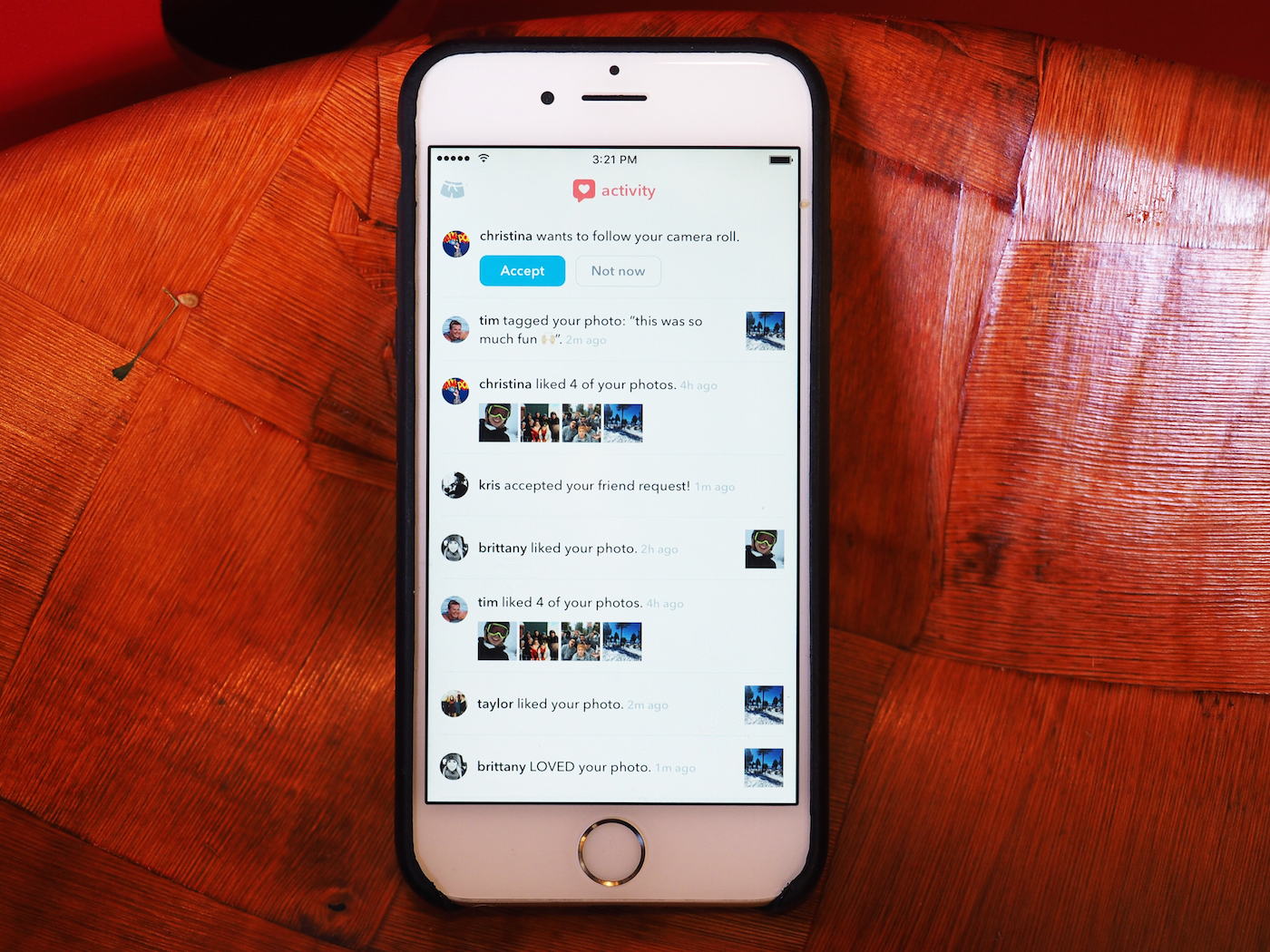
few days ago, a new app called Shorts arrived in the app store. The app lets you share your camera roll with anyone who's interested -- it's okay, you get to choose which photos and videos you want shared -- with the idea that your friends and family will get a peek into your everyday life, and vice versa. Creator Paul Davison likened it to a lifestream, where the mundane becomes entertainment, where oversharing is encouraged, where the meaning of "TMI" is pushed to the bleeding edge. "It's the most personal and intimate thing we've ever created," he said.
Davison is also the CEO and founder of Highlight, an app that made a big splash at SXSW Interactive in 2012. It's a location-based people-discovery app, and it came to prominence at a time when apps of this sort were all the rage. (Others in the space included GlanceeSonarBanjo and Kismet. Haven't heard of these apps? You can see why they didn't last.) Three years since its heyday in Austin, Texas, the app has fallen by the wayside as adoption numbers dipped. Highlight isn't dead just yet, but Davison and co's efforts are now fully focused on Shorts instead. Seeing as it launched just a few days shy of this year's SXSW Interactive -- perhaps with ambitions to be the next hot new app at the event -- that's not too surprising.

It's a tale that's all too common in the roller-coaster world of Silicon Valley. Just last week, Meerkat announced it would be pivoting away from live-streaming and would be refocusing on being a video social network instead. Lest we forget, Meerkat was the hottest app of last year's SXSW Interactive. It quickly caught on fire during the annual Austin tech fest where there was no shortage of cool events to be streamed and shared. Then celebrities like Jimmy Fallon and Madonna started using it, and it seemed like the live-streaming floodgates had opened.
And then Periscope happened. Twitter's patronage helped Periscope surpass Meerkat by leaps and bounds. It also didn't help matters that Periscope's UI was just, well, better. Later in 2015, Facebook got in on the live-streaming act too with Facebook Live, which made it even simpler for folks to start broadcasting. With Twitter and Facebook looming, Meerkat just didn't stand a chance. But as a Skype-like group chat service? Well, maybe. It'll still be a tough road ahead, regardless.
Apps live and die on the fleeting whim of the public. As a result, the constant evolution and flow of new apps is a necessary phenomenon. They get bought out, they get shut down or they figure out an alternative. Remember: Burbn became Instagram, and Twitter was a side project by the creators of Odeo. Similarly, Shorts is a spin-off too. Indeed, Davison tells me that the inspiration behind Shorts came from Highlight in the first place.

"We started to realize the important role photos played in the product," he said. When you tap on a person's profile in Highlight, you can see a few photos of them and request to be their friend. The problem, Davison said, is that people don't really update their profile pictures too often. Plus they didn't really provide too many clues as to who they were as people.
"We thought: Wouldn't it be interesting, when you saw someone nearby, you could learn more about them by flipping through the latest photos in their camera roll?" said Davidson. "It's a really provocative concept, right? Because it's such a private space. But what richer source of data than that? What better way to learn about someone than to see their life through their eyes and what they're capturing?"

It was such a new and disruptive idea that Davidson knew it wouldn't fit into Highlight; after all, that's not what Highlight users signed up for when they joined the service. So they rolled it out into a standalone app. The initial prototype was something called Roll, and it was pretty frictionless. "You could see everything! It was crazy," said Davison. "I saw my friend on vacation take a photo of his boarding pass, his car to see where he parked it, what he was cooking. It was a really fascinating thing."

The problem was it was too scary; you didn't want to accidentally share something you'd regret your friend seeing. So with Shorts, they refined it. It runs in the background, and when you launch it, the app checks to see if you have any new photos or videos in your camera roll. If there are, it opens right to them, where you can then swipe up to share, or swipe down to keep them to yourself. The downside, as far as I see, is that you have to do so with each individual image -- there's no way to mass edit here -- so the approval process could be pretty tedious if you're the type to take lots of photos.
The constant evolution and flow of new apps is a necessary phenomenon.
Davison tells me that early tests showed people really took to it. There are photos on Shorts that you'd never see on Instagram or Facebook, he said. They're less posed, more natural and much more spontaneous. It's the same sort of feel that you'd get on Snapchat, except with Shorts, those photos stick around. "People started taking a lot more photos," said Davison. "The act of simply taking a photo becomes social. It becomes more fun." He also said that by letting your friends share more intimate moments, you get to know them better. "The ability to let them into your world a little bit... really changes relationships."

If that weren't boundary-crossing enough, Shorts is also designed a little like Highlight in that you can enable location to find other people around you who are using the same app. Tap on the person's profile in Shorts, and you're able to see the last 24 photos they published. This, Davison says, is potentially useful at parties or events. "It's enough to get a sense of whether you want to add someone as a friend, but not so many that people worry about putting too much out there."
Davison took pains to tell me that they've built the app with the necessary privacy controls; you only share what you want to share. Still, I found the whole thing a little unsettling. I take care to share only certain things with certain audiences; the idea of sharing everything with any number of people just seems like it's too much. Davison did acknowledge that Shorts pushes boundaries a little, but he says that's a natural thing with most social apps. "Before LinkedIn, it was weird to put your resume online ... before Facebook, we didn't really put baby photos online. These things just evolve."

Perhaps. Or perhaps, like Meerkat, it might need to pivot into something else.

Saturday, March 12, 2016

How existing Windows users can refuse Microsoft's Windows 10 update

Over the past week, I've noticed a number of users complaining on TwitterReddit and other social channels about their PCs automatically updating to Windows 10, allegedly without their intervention.

At least some of the grumbling may be attributable to a patch Microsoft pushed to a number of users this week as part of Patch Tuesday (KB3146449, which is buried inside Internet Explorer security patch KB3139929) which "adds functionality to Internet Explorer 11 on some computers that lets users learn about Windows 10 or start an upgrade to Windows 10." (This update seems only to create a "Get Windows 10" banner, and clicking the cancel button on it seems to remove it permanently, from what I can tell.)
But the growing amount of noise got me curious if there was more going on, beyond yet another new piece of Microsoft nagware. 
I wondered if there had been another mistake like what happened last October when Microsoft pushed Windows 10 to some who hadn't reserved copies and didn't want it to override their Windows 7 or 8.X setups? (Microsoft ended up fixing Windows Update at that time to stop this issue.) 
Or is this the new era of "business as usual" and Windows 7/8 users beware?
Here's a quick recap of what Microsoft officials said last year about Windows 7 and 8.x users should expect to happen:
What's actually happening out there?
  • At least some users are getting a notification that their PCs are scheduled to be updated, but that they have a chance to reschedule or cancel. Unfortunately, the reschedule or cancel option is a lot smaller than the big OK button on the notification screen. The screenshot embedded below is from one of my colleagues, Andrew Zarian, who said he never opted to reserve Windows 10 at all on this device.
getwin10zarian.jpg
  • If users receive this notification and do nothing, they only have 60 minutes' grace period. In other words, if you don't hit reschedule/cancel or OK, the Windows 10 update process just kicks off.  Update: A point of clarification: The initial notification pops up three to four days in advance, alerting users about the scheduled upgrade time, and then another reminder pops up 60 minutes in advance when the time comes. So users actually have two chances to postpone/cancel the Windows 10 update, I've heard.
  • The EULA is presented to users at the completion of the update process. This is the final step. If a user declines it, Microsoft is supposed to roll back and boot into the user's prior operating system. This seems to be happening for at least some users
This is what the Windows 10 EULA looks like. If you don't want it, you need to hit decline.
win10eula.jpg
The best way for users to ensure -- as Windows and Devices chief Terry Myerson promised last year -- they "won't be surprised" about going to Windows 10 -- is to follow Microsoft's guidelines to block the Windows 10 notification update on their devices. By following the steps provided, users shouldn't see any more nags and shouldn't have the update process start or complete without them being aware it's happening.
As I've said before, I am not a fan of Microsoft's decision to take this route to move users to Windows 10. I think users should be the ones who decide if and when they update their PCs to a new operating system. Microsoft will continue to patch and support Windows 7 until 2020 and Windows 8.1 until 2023
Although I do like Windows 10 and am running it on my laptop, I don't want it on my old Dell desktop machine and I have chosen not to upgrade it. (Once this machine is on its last leg, I will replace it with a Windows 10 machine, but for now, it works just fine with Windows 7 and I don't want or need to switch OSes.)
I have heard from plenty of other users who want or need to stay with an older version of Windows for a variety of reasons. Some have older peripherals that aren't supported with Windows 10. Some need custom business apps that aren't compatible with Windows 10. Some are still awaiting Windows 10 drivers from their PC manufacturers. Some really really want to keep their OneDrive placeholders and aren't budging off Windows 8 until Microsoft comes up with something that's a reasonable facsimile. Some don't want to have to spend any time learning a new interface. Some just don't like having their cheese moved.
Yes, I know there are lots of speed, security and other reasons existing Windows users should be thinking about going Windows 10. But I still believe it should be up to users when and if they make that decision.
Microsoft officials maintain that customers do have a choice. When I asked Microsoft for comment about this post, I received this statement from a spokesperson:
"As we shared in late October on the Windows Blog, we are committed to making it easy for our Windows 7 and Windows 8.1 customers to upgrade to Windows 10. As stated in that post, we have updated the upgrade experience to make it easier for customers to schedule a time for their upgrade to take place. Customers continue to be fully in control of their devices, and can choose to not install the Windows 10 upgrade or remove the upgrade from Windows Update (WU) by changing the WU settings."
Final words to the wise: If you don't want Windows 10 to install automatically on your Windows 7/8 PC or tablet, for whatever reason, here's what to remember:
  • Check your Windows Update settings and make sure, if you have Automatic Updates/Recommended on, to set the time so any updates arrive when they are convenient and you are able to OK or deny them before they install. 
  • Just say no to the EULA. If the auto-update begins, you can still stop Windows 10 from completing the install by refusing to accept the software licensing terms and conditions.

Thursday, March 10, 2016

Facebook just bought the popular face swapping app that's dominating the App Store right now

Screen Shot 2016 03 09 at 10.24.38 AMGet ready to see more silly selfies.
Facebook is buying the company behind one of the most popular apps in the App Store, Masquerade
Masquerade's app lets you overlay playful, animated filters over your face using your phone's selfie camera. The effects range from Leonardo DiCaprio at the Oscars (right) to a monkey, and they're fun to play with. You can record video in the app or take a still photo to share on other social networks.
Expect Masquerade's face swapping filters to show up in the Facebook app eventually. 
The social network also plans to keep Masquerade operational as a standalone, free app, as well as integrating its technology into Facebook. The effects join a line of creative tools Facebook has added to its app already, like stickers, finger doodles, and photo filters.
Masquerade has been a hit in its short time on the App Store. It has an average rating of 5 stars and has consistently stayed near the top of the App Store's charts, according to App Annie. It's also available on Android phones.
"At Masquerade, we’ve worked hard to make video more fun and engaging by creating filters that enhance and alter your appearance," the couple-month-old-startup said in a blog post. "Now, we’re excited to join forces with Facebook and bring the technology to even more people. Within Facebook, we’re going to be able to reach people at a scale like never before."
"Masquerade has built a fantastic app, MSQRD, with world-class imaging technology for video," a Facebook spokesperson told Tech Insider. " We’re excited to welcome Masquerade to our team and continue enhancing the Facebook video experience.”
The app's three founders, Eugene Nevgen, Sergey Gonchar, and Eugene Zatepyakin, will work out of Facebook's London office, the company said. Facebook declined to say how much it paid for Masquerade.

Wednesday, March 9, 2016

Google’s AI beats world Go champion in first of five matches

In a landmark battle between man and artificial intelligence (AI), the world champion of the game Go was narrowly defeated by his computer opponent. 
Google's DeepMind AlphaGo program beat South Korea's Lee Se-dol in the first of a series of games in Seoul. 
In October 2015, AlphaGo beat the European Go champion, an achievement that was not expected for years.
A computer has beaten the world chess champion, but the Chinese game Go is seen as significantly more complex. 

Demis Hassabis tweetImage copyrightTwitter
Image captionDeepMind's chief tweeted about the achievement

The BBC's Stephen Evans in Seoul said Mr Lee appeared "nervous, sighing and shaking his head" at the outset of the match. 
Throughout most of the game he had seemed to have the upper hand but in the last 20 minutes, AlphaGo took an unassailable lead. Mr Lee then forfeited, handing victory to his opponent.
"I was very surprised because I did not think that I would lose the game," said Mr Lee.
"A mistake I made at the very beginning lasted until the very last."
The Go player has won 18 world championships since turning professional at the age of 12. 
He said AlphaGo's early strategy was "excellent'' and that he was stunned by one unconventional move it had made that a human never would have played. 
Despite his initial loss though, he did not regret accepting the challenge.
"I had a lot of fun playing Go and I'm looking forward to the future games,'' he said.
The two sides will play a total of five games over the coming days for a prize of about $1m (£700,000). 

ScoreboardImage copyrightGoogle
Image captionThe score board after the first of five matches

Algorithm vs intuition

The five-day battle is being seen as a major test of what scientists and engineers have achieved in the sphere of artificial intelligence.
Go is a 3,000-year old Chinese board game and is considered to be a lot more complex than chess where artificial intelligence scored its most famous victory to date when IBM's Deep Blue beat grandmaster Gary Kasparov in 1997. 
But experts say Go presents an entirely different challenge because of the game's incomputable number of move options which means that the computer must be capable of human-like "intuition" to prevail.

Lee Se-dolImage copyrightGoogle
Image caption"I hope this advanced technology will be used for useful things," Mr Lee told the BBC

"Playing against a machine is very different from an actual human opponent," Mr Lee told the BBC ahead of the match. 
"Normally, you can sense your opponent's breathing, their energy. And lots of times you make decisions which are dependent on the physical reactions of the person you're playing against. 
"With a machine, you can't do that."

Microsoft app logs you into Windows 10 using your phone

Windows 10 already does a lot to spare you from typing in your password, but Microsoft wants to take that text-free login one step further. The company has quietly posted a beta Phone Sign-in app for Windows 10 Mobile that, as the name suggests, signs you in to your nearby Windows 10 PC (you have to pair over Bluetooth) with a tap. There's no guarantee that you can run it -- you'll need the right credentials on top of living in an all-Microsoft ecosystem. If all the stars align, though, the Lumia in your pocket might be all you need to authenticate and start working.

This Is What Bill Gates Thinks About the Apple vs. FBI Case

After making some initial comments last month that suggested he had sided with the FBI in its case against Apple, Microsoft co-founder Bill Gates spoke up on the subject again as part of arecent Reddit AMA. Asked to weigh in, Gates said he hopes government and private companies can come together to discuss best practices as it relates to information-gathering.
There is a perception that exists that the government may overstep its bounds in this area. Gates said a meeting where rules are defined, or at least discussed, would help establish the appropriate "checks" to ensure information is only obtained and used for situations involving criminal activity.
"I think there needs to be a discussion about when the government should be able to gather information. What if we had never had wiretapping?" he said. "Also, the government needs to talk openly about safeguards. Right now a lot of people don't think the government has the right checks to make sure information is only used in criminal situations. So this case will be viewed as the start of a discussion.
"I think very few people take the extreme view that the government should be blind to financial and communication data but very few people think giving the government carte blanche without safeguards makes sense," he added. "A lot of countries like the UK and France are also going through this debate. For tech companies there needs to be some consistency including how governments work with each other. The sooner we modernize the laws the better."
Asked directly "What would you do if you were Apple?" Gates said he would like to see the iPhone-maker propose a plan that strikes a balance between giving government authorities the ability to obtain infomration while also having safeguards in place to ensure this technology is not abused.
"There is no avoiding this debate and they could contribute to how the balance should be struck," he said.
In February, Apple was ordered by the government to create essentially a new version of iOS that would allow authorities to tap into the iPhone of San Bernadino shooter Syed Rizwan Farook. In an open letter, Apple CEO Tim Cook said what the government is asking of the company fundamentally violates the privacy, security, and trust of its customers. In a follow-up letter to consumers, Apple said it is technically possible to do what the FBI is asking. Apple refuses, however, because it is "too dangerous."
"The only way to guarantee that such a powerful tool isn't abused and doesn't fall into the wrong hands is to never create it," Apple said at the time.
In his own statement, FBI director James Comey said the government has no intention of creating a master key to "set loose on the land."
"The particular legal issue is actually quite narrow," he said. "The relief we seek is limited and its value increasingly obsolete because the technology continues to evolve. We simply want the chance, with a search warrant, to try to guess the terrorist's passcode without the phone essentially self-destructing and without it taking a decade to guess correctly. That's it. We don't want to break anyone's encryption or set a master key loose on the land."
"Although this case is about the innocents attacked in San Bernardino, it does highlight that we have awesome new technology that creates a serious tension between two values we all treasure--privacy and safety. That tension should not be resolved by corporations that sell stuff for a living."
Facebook founder Mark Zuckerberg, Twitter founder Jack Dorsey, and Google CEO Sundar Pichai all sided with Cook and Apple, according to FT. Additionally, Edward Snowden said the Apple vs. FBI battle is "the most important tech case in a decade."
Also in Gates' AMA, someone asked the Microsoft veteran--who no longer has any day-to-day responsibilities at the company--to bring back the Age of Empires strategy series.

Microsoft testing app that unlocks Windows 10 PCs over Bluetooth


Microsoft is currently testing a new version of its Authenticator app for Windows 10. Twitter user WalkingCat discovered the app, named "phone sign-in beta." It appears the updated app will allow Windows 10 users to unlock their machines over Bluetooth, simply tapping the machine from a list to unlock it.
Microsoft has been introducing new ways to sign into Windows 10 PCs without a password, including Windows Hello support through fingerprint readers and cameras. This latest Authenticator app is currently in internal beta testing at Microsoft, and it appears to be limited to Windows 10 Mobile devices. Microsoft doesn't currently offer its own authenticator app for iOS or Android, so it's unlikely we'll see a similar version across all platforms.

    Tuesday, March 8, 2016

    Microsoft is trying to bring back the '80s with its Windows 10 strategy Microsoft HoloLens

    Probably the smartest choice Bill Gates ever made came in 1980, when he decided not to hand over the copyright for Microsoft's first operating system to IBM.
    In 1980, IBM contracted a startup called Microsoft to deliver DOS, an operating system for its forthcoming IBM PC, on a tight deadline.
    The IBM PC came out in 1981 and soon became a smash hit, surpassing the leading Apple II.
    A horde of competitors rushed to build their own "IBM Compatible" clones that could run all of the same software and use all of the same hardware upgrades.
    But to build those IBM clones, they needed DOS. And if they wanted DOS, they needed to fork over cash to Microsoft. Microsoft kept the rights in lieu of royalties from IBM.
    DOS put Microsoft the very center of the PC revolution, even through the era of Windows, and even after IBM left the PC market, eventually selling off that business.
    Thirty-six years later, it's been a long time since the IBM PC moment. And with the Apple iPhone and Google Android ruling the all-important mobile market, Microsoft missed its shot at the mobile-operating-system revolution.
    That's why Microsoft, which keeps boasting about how much it loves selling cloud services and subscriptions, is suddenly investing so much in hardware like the HoloLens and the Surface. If no new IBM PC will come along like in 1981, Microsoft will just have to build it itself.

    Jump-starting the future

    The iPhone and Android have a stranglehold on the mobile market. Apple has ridden the iPhone to become the most valuable company in the world, while Google's Android is now the most popular operating system in the world.
    Microsoft missed that boat. And Microsoft, going forward, has to decide if it wants to keep throwing good money after bad into its struggling Windows phone business while it tries to force the next big thing to happen.
    Microsoft has decided to build the devices it wants to see in the world. And with PC sales shrinking, Microsoft is looking to more science-fictional concepts.
    The tone was set in 2012, when Microsoft launched the Surface, its first tablet. That was followed up by the Surface Pro laptop/tablet hybrid, and, eventually, the Surface Book, Microsoft's first full-fledged laptop.
    HoloLensTEDMicrosoft HoloLens.
    Looking to the future, the Microsoft HoloLens looks to be the first commercially available augmented-reality headset, layering holograms on top of your field of vision.
    The important thing that Surface and HoloLens have in common is that they're already sparking competitors to build their own clones. Samsung, HP, and lots more are building devices like the Surface, while Asus and perhaps Intel are working on HoloLens clones.
    And in all cases, those cloned devices are running the Microsoft Windows 10 operating system.
    So even if Microsoft isn't selling the hardware, it's increasing the reach of Windows 10 with every cloned device sold. HoloLens has the potential to set the standard for holographic computing, but it won't necessarily be the most popular holographic computer.
    Sound familiar?

    Margin of error

    The problem is that building complex machinery is a low-margin business, across all industries.
    Building a computer (or a hologram headset, or a car) is labor-intensive, requires a lot of specialized parts, and takes time to make each and every unit. Dell's margins hover around 3%Ford's are around 7%.
    Meanwhile, one of Microsoft's big advantages has always been that software is a much higher-margin business than hardware. In 1999, right at the height of its powers, Microsoft's operating margins were 51.7%.
    Microsoft's smart move was to make profitable software and let companies like IBM, Dell, HP, and Compaq build their low-margin, "IBM Compatible" PCs. After all, they all still needed buckets of pricey Windows licenses, no matter what they charged for their computers.
    surface book detachableMicrosoftMicrosoft Surface Book.
    Therefore, it seems unlikely that Microsoft really sees all of this business of making hardware as something truly critical to its future, compared with its higher-margin Windows and Office businesses.
    The Surface is popular, and even its Xbox One video-game console is on the upswing in sales, but Microsoft has clearly signaled that in all corners of its business, the future is in Windows 10 and cloud services.
    So while it's unlikely that Microsoft will stop selling these devices any time soon — at least, so long as they keep making money — it's equally obvious that Microsoft is mostly interested in using them to drive the future.
    There's plenty of competition, especially in the holographic world. Magic Leap, for instance, is a well-funded startup with some truly impressive technology that has nothing to do with Microsoft or Windows 10.
    But if Microsoft succeeds, it'll be the center of a new revolution, and the eighties will truly be back.


    Copyright @ 2013 Technology . Designed by Templateism | Love for The Globe Press